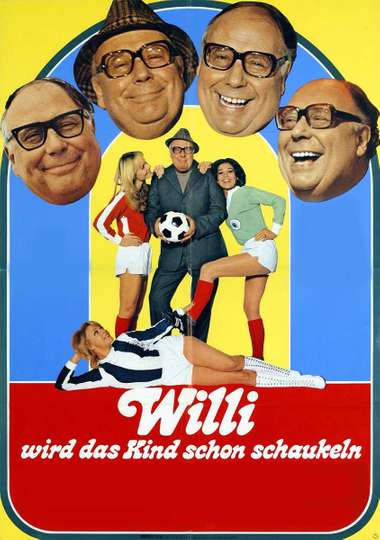
The Unforgettable Legacy of Heinz Erhardt and "Willy Wird Das Kind Schon Schaukeln"
Heinz Erhardt remains an indelible figure in German entertainment history, a master of wordplay, a charming comedian, and a beloved actor whose unique brand of humor captivated generations. His legacy is vast, encompassing countless films, stage performances, and memorable poetic verses. Yet, even the brightest stars have their less luminous moments. Among his extensive filmography, one title often surfaces in discussions regarding his career's twilight:
Willi wird das Kind schon schaukeln. Released in 1972, this film holds a peculiar place, not just as Erhardt's final cinematic outing but also as one frequently cited as his weakest. For fans and film historians alike, understanding the context of
Willy Wird Das Kind Schon Schaukeln is crucial to appreciating the full spectrum of Erhardt's incredible journey. It's a film that, despite its shortcomings, offers a bittersweet glimpse into the closing chapter of a comedic titan's career, revealing the challenges of maintaining brilliance even for a legend.
Plotting for Survival: The Deceptive Scheme of Willi Kuckuck in "Willy Wird Das Kind Schon Schaukeln"
The narrative of
Willi wird das Kind schon schaukeln centers around Willi Kuckuck, portrayed by Heinz Erhardt himself, a well-meaning but desperate chairman of the local football club, "F.C. Jungborn." The club is teetering on the brink of financial collapse, a common plight for many community organizations, but one that particularly vexes Willi. The situation is exacerbated by a threatening neighboring junkyard owner, eyeing the club's valuable land. Driven by a fervent desire to save his beloved F.C. Jungborn, Willi hatches a plan that is as audacious as it is morally questionable.
His scheme involves fabricating a series of marital unions for his daughters. He sends word to his exceedingly wealthy aunt, Elvira, who resides in sunny South America, informing her that two of his daughters have found their life partners and tied the knot. As expected, the generous Aunt Elvira promptly dispatches a handsome sum, a traditional dowry intended for the "newly established households." Willi, with a cunning that belies his usual persona, expertly redirects these funds directly into the ailing club's coffers, providing a much-needed lifeline. The initial relief is palpable, but as with all well-intentioned deceptions, the truth has a way of catching up. Overwhelmed with joy and keen to celebrate the supposed marital bliss of her nieces, Aunt Elvira announces her imminent arrival in Germany to visit the "freshly married" couples. This impending visit sets the stage for a classic comedic scramble, as Willi and his family must now frantically maintain the elaborate charade, leading to a series of farcical encounters and frantic cover-ups. For a deeper dive into the comedic web woven by Willi Kuckuck, explore
Faking Marriages to Save a Club: The Plot of Willi wird das Kind schon schaukeln.
The Shadows of a Legend: Why "Willy Wird Das Kind Schon Schaukeln" Falters
Despite the intriguing premise and the star power of Heinz Erhardt,
Willi wird das Kind schon schaukeln has largely been remembered for its critical reception as one of his least successful films. Film critics and audiences alike pointed to several factors that contributed to its perceived weakness, making it a curious case study in the annals of German comedy.
The Flat Gags and Clichéd Performances
One of the primary criticisms leveled against
Willy Wird Das Kind Schon Schaukeln was the perceived lack of ingenuity in its comedic elements. Compared to Erhardt's earlier works, which often showcased his unique brand of clever wordplay, subtle wit, and physical comedy, the gags in this film were often described as "plat," or flat and uninspired. Many felt they relied too heavily on predictable slapstick and familiar situational comedy tropes without the fresh twist that Erhardt usually brought. Furthermore, the supporting cast, while competent, was often accused of delivering "cliché-haft agierenden" or clichéd and stereotypical performances, failing to inject the necessary dynamism or originality into their roles. This combination resulted in a comedic experience that, for many, felt uninspired and fell short of the high standards set by Erhardt's previous successes.
The Uwe Seeler Cameo: A Missed Opportunity?
In an attempt to add appeal, the film featured a guest appearance by Uwe Seeler, a legendary German football player. At the time, Seeler was a household name and a national hero, and his inclusion could have been a brilliant stroke of marketing and comedic timing, especially given the film's football club backdrop. However, critical consensus suggests that Seeler's cameo, while a novelty, did little to elevate the film's overall quality. Often, such celebrity appearances are intended to provide a memorable laugh or a moment of surprising star power, but in
Willy Wird Das Kind Schon Schaukeln, it seemed to pass by without making a significant impact on the narrative or the film's comedic resonance. It felt more like an isolated gimmick rather than an organically integrated element that could genuinely save a struggling production.
The Context of Erhardt's Health
Perhaps the most poignant factor contributing to the film's diminished quality lies in the personal circumstances of its star.
Willi wird das Kind schon schaukeln was Heinz Erhardt's last film. Tragically, he had suffered a severe stroke that left him largely withdrawn and significantly impacted his ability to perform as he once had. While the film was released in 1972, production would have occurred around the time of, or shortly after, these health challenges began. It is plausible, even likely, that his physical condition affected his performance, leading to a more subdued and less energetic portrayal than audiences were accustomed to. This context is vital when evaluating the film, as it transforms a simple critical assessment into a more empathetic understanding of the difficulties faced by an artist at the end of a brilliant career. It's a testament to his dedication that he completed the film at all, even if it didn't fully capture the essence of his peak comedic genius.
Beyond the Flaws: The Enduring Significance of Erhardt's Final Act
While critics may have labeled
Willy Wird Das Kind Schon Schaukeln as Erhardt's weakest film, its historical and cultural significance cannot be understated. Every piece of an artist's oeuvre contributes to their complete story, and even the less celebrated works offer valuable insights. For fans of Heinz Erhardt, this film serves as a crucial bookend, providing a final glimpse of a beloved figure on the silver screen.
One must consider films like this within their historical context. The early 1970s German comedy landscape was evolving, and humor sensibilities were shifting. What might appear "plat" or clichéd to a modern audience, or even to contemporary critics comparing it to Erhardt's earlier, more innovative work, might still contain elements that resonated with a segment of the audience at the time. It is a time capsule, preserving a particular style of filmmaking and humor from that era. Moreover, the very existence of the film underscores Erhardt's enduring popularity and the industry's desire to continue showcasing him, even as he faced personal struggles. His presence alone was enough to draw audiences.
Tips for Appreciating Films in Context:
*
Research the Era: Understand the comedic trends, societal norms, and cinematic techniques prevalent at the time of the film's release.
*
Consider the Artist's Journey: Reflect on the actor's or director's career trajectory, personal challenges, and artistic evolution. A "weak" film might be an experiment, a commercial obligation, or a poignant final effort.
*
Look for Subtle Nuances: Even in a critically panned film, elements of the artist's signature style or moments of unexpected brilliance can often be found.
*
Acknowledge Technical Limitations: Budget, technology, and production pressures can all impact the final product.
Ultimately,
Willy Wird Das Kind Schon Schaukeln represents more than just a film; it is a bittersweet farewell. It reminds us that even the most talented individuals are human, susceptible to the vagaries of health and the occasional creative misstep. Yet, it does not diminish the towering achievements of Heinz Erhardt. Instead, it adds a layer of depth to his legacy, showcasing his resilience and commitment to entertaining audiences until the very end. For a comprehensive look at the film's place in his career, consider reading
Willi wird das Kind schon schaukeln: Erhardt's Final Comedy Scheme.
Conclusion
Willi wird das Kind schon schaukeln holds a unique, somewhat melancholic position in the illustrious filmography of Heinz Erhardt. While often cited as his weakest film, marked by flat gags, clichéd performances, and a largely ineffective celebrity cameo, its importance transcends critical appraisals. It stands as Heinz Erhardt's final cinematic curtain call, a poignant record of a beloved artist performing under challenging circumstances. The film's narrative of desperation and deception, though perhaps not executed with Erhardt's usual comedic finesse, still offers a glimpse into the kind of wholesome, albeit sometimes predictable, humor that characterized German cinema of the early 1970s. Ultimately,
Willy Wird Das Kind Schon Schaukeln serves as a powerful reminder of Erhardt's enduring legacy, not just as a comedic genius, but as an entertainer who gave his all until the very end, solidifying his place as an unforgettable icon in German culture.