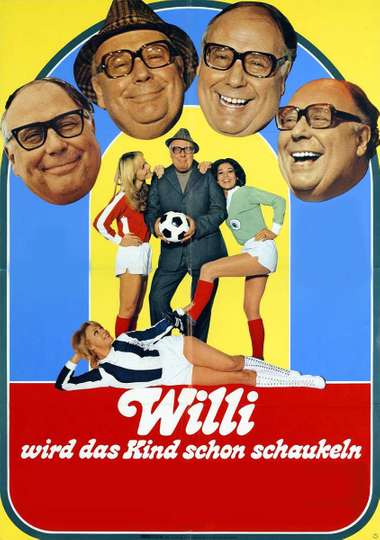
In the annals of German comedy, few names resonate as strongly as Heinz Erhardt. His unique blend of dry wit, observational humor, and endearing clumsiness made him a national treasure. It's against this backdrop that we delve into one of his final cinematic outings, a film whose title itself is a colloquial promise: Willi wird das Kind schon schaukeln, or in its common English reference, "Willy Will Rock the Baby." This 1972 comedy, directed by Werner Jacobs, presents a delightful, if somewhat convoluted, plot centered on one man's desperate scheme to rescue his beloved local football club from the brink of financial ruin. The premise? Faking his daughters' marriages to secure much-needed funds from a wealthy, unsuspecting relative abroad. The resulting comedic chaos is a testament to the lengths one man will go for his passions, even if it means weaving a tangled web of matrimonial deception.
The film, known primarily by its German title, Willi wird das Kind schon schaukeln: Erhardt's Final Comedy Scheme, encapsulates a particular era of German humor and Erhardt's enduring appeal. While it may not be considered his strongest work, as critical analysis often suggests, its central premise offers a fascinating glimpse into the mechanics of comedic misdirection and the timeless struggle between aspiration and fiscal reality.
The Desperate Ploy: Faking Marriages for FC Jungborn
The heart of Willy Wird Das Kind Schon Schaukeln lies in the profound desperation of its protagonist, Willi Kuckuck, portrayed with characteristic charm by Heinz Erhardt. Willi isn't just a casual fan; he's the passionate chairman of the local football club, "F.C. Jungborn." This isn't merely a hobby for Willi; it's a central pillar of his community and, by extension, his life. The club, however, faces an existential threat: impending bankruptcy. The financial woes are compounded by an aggressive neighboring junkyard owner who casts a menacing shadow over their precious pitch, threatening to claim it for his own. For Willi, losing FC Jungborn is unthinkable – a blow to his pride, his community, and his very identity.
Driven to the edge, Willi hatches a plan that is as audacious as it is morally questionable. He recalls his wealthy relative, Erbtante Elvira (or his sister, depending on the specific translation and source variation, both are referenced in original contexts), living far away in South America. Sensing an opportunity, Willi concocts an elaborate fabrication: he informs her that two of his daughters have recently tied the knot. Naturally, a generous relative would want to contribute to the "new household" and provide a substantial dowry or "Mitgift." And just as Willi anticipated, the money arrives – a considerable sum that he promptly, and discreetly, diverts directly into the ailing club's coffers. This ingenious, albeit ethically dubious, scheme momentarily staves off disaster for FC Jungborn. The comedic potential of this setup is immense, relying on the audience's knowledge of the deception and the inevitable unraveling of the truth. It's a classic comedic trope: a seemingly perfect plan built on lies, destined to collapse spectacularly.
The brilliance of this initial setup in Willy Wird Das Kind Schon Schaukeln isn't just in the absurdity of the lie, but in its motivation. Willi isn't driven by personal greed, but by a genuine, almost paternal, love for his football club. This noble (if misguided) intention often lends a degree of empathy to characters engaged in such deceptive acts in comedy, making their eventual comeuppance less punitive and more purely humorous.
When the Relative Comes Calling: A Cascade of Comedic Chaos
The calm before the storm in Willy Wird Das Kind Schon Schaukeln is delightfully short-lived. The success of Willi's fraudulent dowry scheme, while initially a relief, soon turns into his greatest nightmare. Overwhelmed by joy at the thought of his daughters finding marital bliss, his rich relative in South America decides to pay a surprise visit to Germany. Her intention: to meet the newlywed couples and celebrate their happiness in person. For Willi and his daughters, this announcement triggers an immediate and frantic scramble to maintain the charade.
This is where the true comedic engine of the film kicks into high gear. The initial lie, simple enough to send via mail, now requires elaborate staging, convoluted explanations, and the unwitting (or sometimes unwilling) participation of various townsfolk. The daughters, who were never actually married, must suddenly produce husbands. These "husbands" are hastily recruited, often leading to a parade of misfits and mismatched individuals whose attempts to play the part only amplify the absurdity. The film thrives on situational comedy, where each attempt to cover one lie only necessitates another, larger falsehood, creating a snowball effect of misunderstandings and hilarious close calls.
While the film is celebrated for its Erhardt connection, some critics note that Willy Wird Das Kind Schon Schaukeln suffers from "platten Gags und klischeehaft agierenden Schauspielern" – flat gags and clichéd acting. Indeed, the humor often leans into broad strokes and predictable scenarios. However, this simplicity can also be part of its charm, reflecting a style of comedy popular in its era. The appeal often lay in the sheer chaos and the relatable exasperation of characters caught in their own traps. The inclusion of German football legend Uwe Seeler in a cameo role adds a touch of local flavor and might have drawn in additional viewers at the time, though even his presence couldn't elevate the film's critical standing significantly. Despite its perceived flaws, the film’s portrayal of escalating lies and frantic cover-ups remains a classic comedic structure, offering a window into the popular German humor of the early 1970s.
Heinz Erhardt's Final Bow: A Look at the Star and the Film's Legacy
Willi wird das Kind schon schaukeln holds a bittersweet place in German cinema history as the last film featuring the beloved Heinz Erhardt. Released in 1972, it came at a poignant time for the legendary comedian. While the film itself was completed before Erhardt suffered a debilitating stroke, its release coincided with a period when he was already living a largely reclusive life due to his health. This makes the film a poignant farewell for fans, a final opportunity to see their idol in action, even if the creative context was tinged with melancholy.
For many, Heinz Erhardt defined a certain kind of German humor – understated, often poetic, and characterized by wordplay and self-deprecating wit. In Willy Wird Das Kind Schon Schaukeln, Erhardt brings his signature charm to the role of Willi Kuckuck, imbuing the desperate football chairman with a sympathetic humanity, despite his deceptive actions. His portrayal is a cornerstone of the film, reminding audiences of the unique talent that made him a household name. However, critical consensus often places this film among his weaker works. As noted in contemporary reviews and retrospective analyses, the script's "flat gags" and sometimes "clichéd acting" by the supporting cast did not always live up to the high standards set by Erhardt's earlier, more celebrated films. This assessment isn't uncommon for artists at the tail end of prolific careers, where creative output can sometimes waver. The cinematic landscape was also shifting in the early 1970s, with new comedic styles emerging, potentially making the traditional humor of Willy Wird Das Kind Schon Schaukeln feel a bit dated even upon its release.
Despite its critical reception, the film's significance as Erhardt's final cinematic testament is undeniable. It serves as a historical marker, completing a remarkable filmography that entertained generations. While not a masterpiece, it nonetheless showcases the enduring appeal of Erhardt's screen presence and his ability to carry a story, even one with a less polished script. For those interested in understanding the full breadth of his work, and The Legacy of Willi wird das Kind schon schaukeln: Erhardt's Weakest Film offers a valuable, albeit complex, piece of his artistic puzzle.
Beyond the Laughs: Themes and Lessons from Willi wird das Kind schon schaukeln
While Willy Wird Das Kind Schon Schaukeln is fundamentally a comedy, its outlandish plot inadvertently touches upon several universal themes and offers a few practical insights. At its core, the film explores the powerful allure of passion and community. Willi Kuckuck’s extreme measures underscore the deep connection many feel towards local sports clubs, which often serve as vital social hubs. His deception, while ethically dubious, is born out of a profound love for FC Jungborn, highlighting the lengths to which individuals will go to preserve something they cherish.
Another prominent theme is the double-edged sword of deception. Willi's initial success with his fake marriages brings temporary relief, but it inevitably leads to greater complications and anxieties. The film serves as a comedic cautionary tale, illustrating how a single lie can quickly spiral out of control, demanding ever more elaborate fabrications and involving more unwitting participants. This constant struggle to maintain the charade is the source of much of the film's humor, but it also subtly comments on the inherent unsustainability of falsehoods.
The film's title itself, "Willi wird das Kind schon schaukeln," is an idiom meaning "Willi will manage it," or "Willi will sort it out." This phrase, rooted in German colloquialism, encapsulates the protagonist's initial confidence and determination. However, the unfolding plot comically questions just *how* well Willi truly manages it, as he lurches from one crisis to another. It's a testament to his tenacity, perhaps, but also a humorous indictment of his methods.
Practical Insights:
- The Lifeline of Local Sports Clubs: The film highlights the precarious financial situation many smaller, independent sports clubs often face. It implicitly makes a case for community support and creative fundraising (though perhaps not Willi's method!).
- The Price of a White Lie: While a comedy, it offers a gentle reminder that even well-intentioned deceptions can lead to immense stress and unintended consequences. Honesty, even when difficult, often simplifies life in the long run.
- Enduring Comedic Tropes: Despite its age and critical reception, the film demonstrates the timeless appeal of certain comedic devices: mistaken identity, escalating lies, and characters forced into absurd situations. These elements continue to form the backbone of many successful comedies today.
Ultimately, Willy Wird Das Kind Schon Schaukeln, through its comedic lens, provides a glimpse into the human tendency to overcomplicate things, the power of community ties, and the chaotic beauty of a plan gone hilariously wrong.
Conclusion
Willi wird das Kind schon schaukeln may hold a complex position within Heinz Erhardt’s extensive filmography, often cited as one of his less impactful works, yet its core premise remains undeniably charming and universally relatable. The story of Willi Kuckuck’s desperate, yet well-intentioned, attempt to save his beloved FC Jungborn by faking his daughters' marriages is a masterclass in comedic misdirection. It’s a narrative that, while rooted in the specific cultural context of 1970s Germany, speaks to the enduring themes of loyalty, desperation, and the snowball effect of a single, audacious lie.
As the final cinematic vehicle for the legendary Heinz Erhardt, Willy Wird Das Kind Schon Schaukeln serves as a valuable document for fans and film historians alike. It captures his characteristic screen presence one last time, even if the surrounding script and performances didn't always match his formidable talent. The film, despite its critical nuances, stands as a quirky, heartwarming, and occasionally frantic testament to the lengths one man will go for his passions. It reminds us that sometimes, even when a plan teeters on the edge of disaster, there’s a certain comedic grace in watching someone try their best to "rock the baby" and make things work, even if it means orchestrating a grand matrimonial hoax.